Between Dream and Disaster: What makes a good Liveaboard?
1. Experience with Silver Bank
2. Egypt Experience
3. Checklist
4. Standards & Reviews
Silver Bank Experience
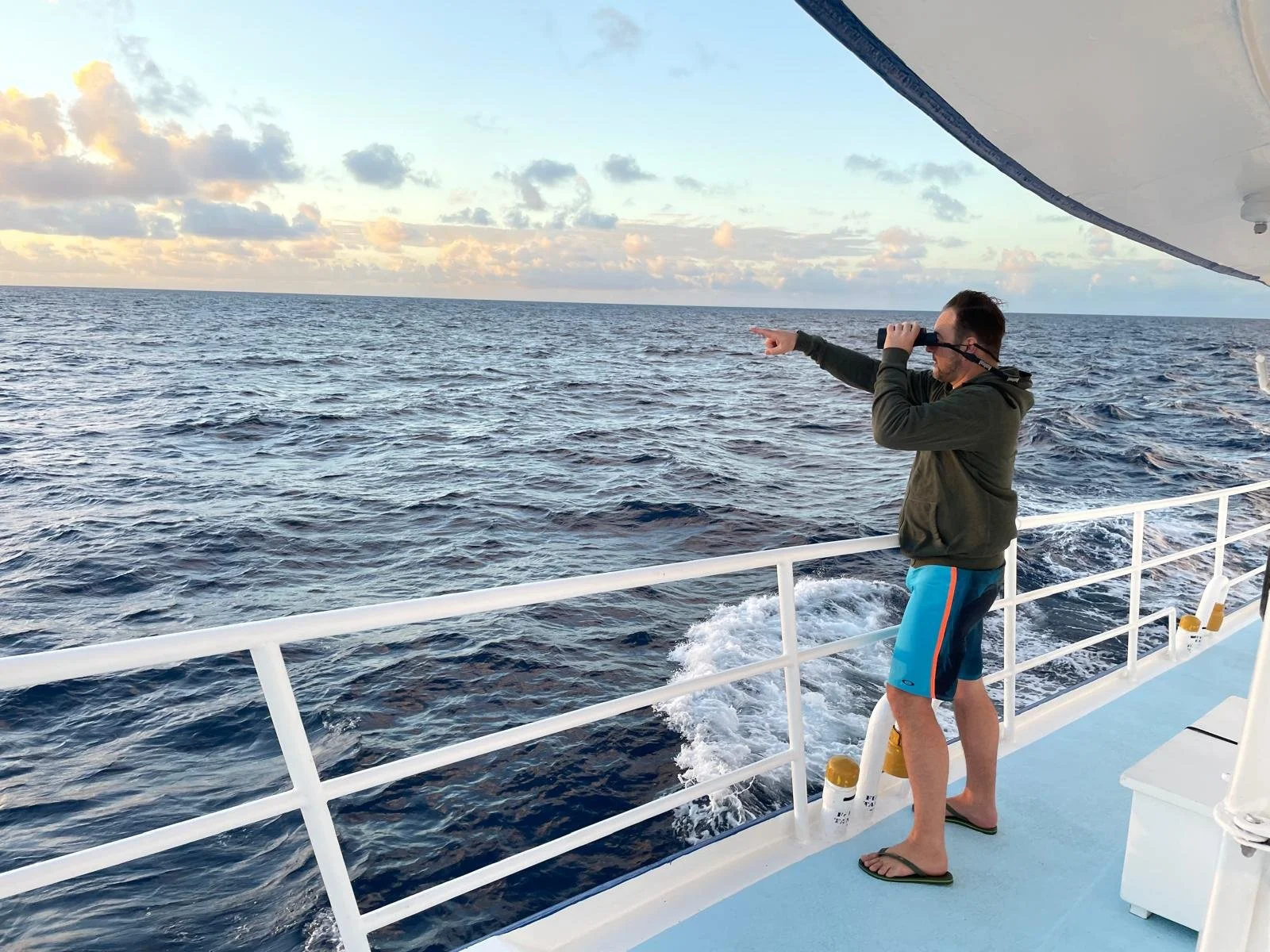
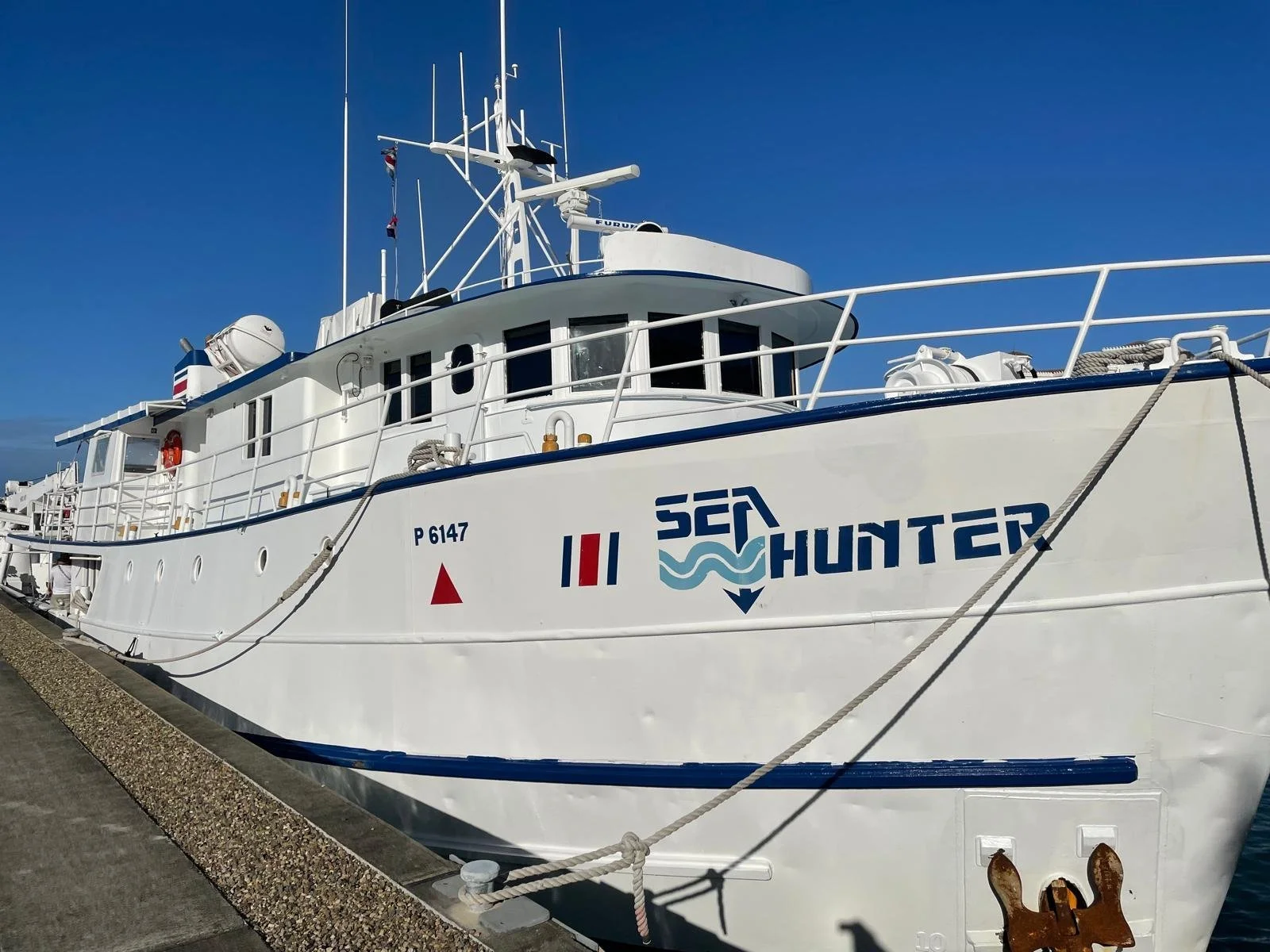
February 2022: We board the Sea Hunter at the Ocean World Marina in Cofresi near Puerto Plata in the Dominican Republic. A steel vessel 36 meters long, originally built as a commercial diving support vessel for the oil industry in the Gulf of Mexico. It is an extensively rebuilt, robust and well-equipped vessel. We hadn't expected such a large ship for the 8-hour crossing to Silver Bank, where we want to snorkel with humpback whales. It will be an experience that will stay with me forever, because: "You'll never forget your first whale".
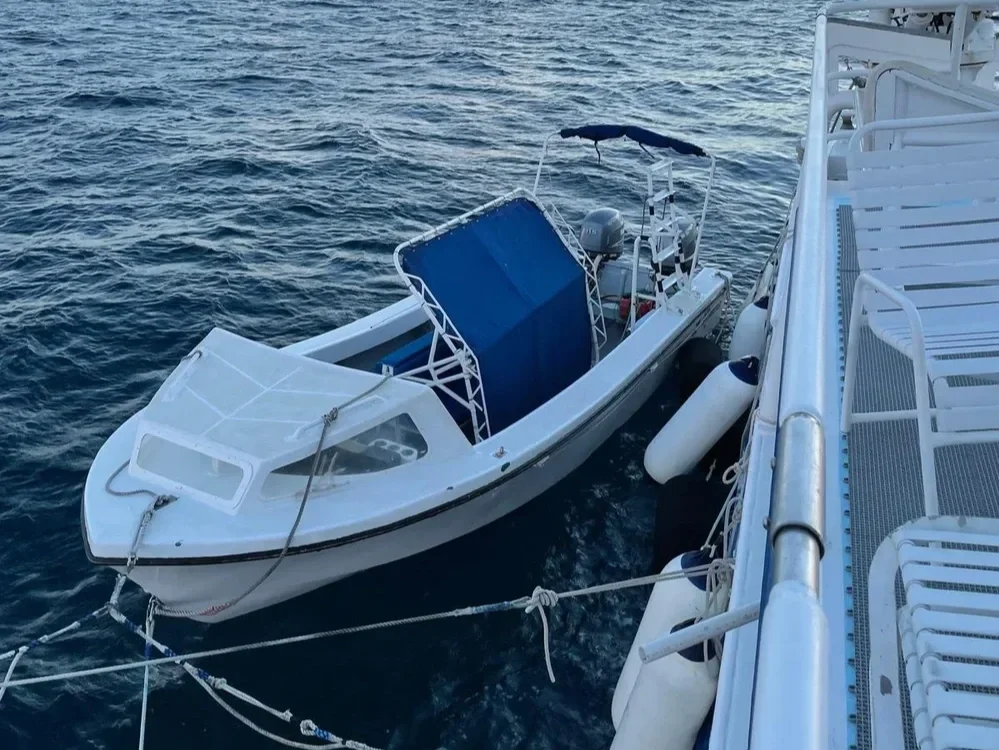
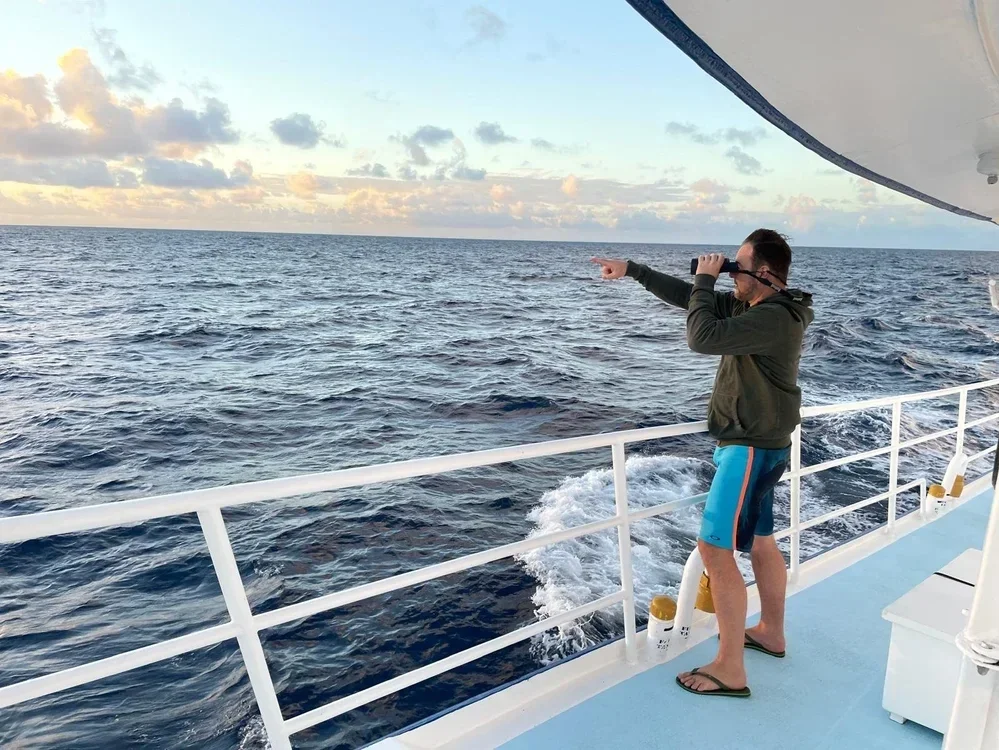
We have knowledgeable staff and tour guides: Captain Gene Flipse, who has been offering the Silver Bank tour for 20 years; Jeff Pantukhoff, a whaleman with decades of experience leading whale-watching tours for gray whales and humpback whales and chairman of the nonprofit Whaleman Foundation; and marine biologist Catherine. The ship is comfortably equipped: 10 air-conditioned cabins with private bathrooms for up to 20 guests, daily cleaning service, a large common area (living room), and a sun deck for sundowners. The food is varied and international, featuring fish, meat, and a good selection for vegetarians. The staff and kitchen are flexible in accommodating our special requests. Upon arriving at Silver Bank, one of the few places in the world where you can observe humpback whales’ courtship behavior even below the water’s surface, we go whale watching every morning and afternoon for 3 hours each, divided into 2 groups, using 2 motorized hard-shell boats—and have numerous encounters with female whales and their calves, “young” male whales competing with one another, and the senior “whale singers” who have developed and continuously refined their courtship songs over the years.
On our very first day at sea, we receive a detailed boat briefing via PowerPoint slides and a walkthrough to inspect the life rafts, try on the life jackets, and locate the fire extinguishing systems. The safety equipment is in good condition.
Experience in Egypt:
, March 2025: The liveaboard trip in Egypt with Emperor Divers begins with a tour of the Seven Seas. A wooden boat, designed and built by a German operator with Egyptian “shipyard workers” in the early 2000s. The boat was recently taken over by the new operator and has undergone some renovations. We ask about the captain and learn that there is a new captain who is still on his way. The old one is reportedly on Ramadan leave. After a few days, we hear that the old captain apparently refused to sign the safety protocol and was therefore fired—rumor or fact? We begin our tour in the afternoon, heading south from Marsa Alam. There is a verbal briefing about the ship, the trip, the dive sites, and the procedures for diving, meals, etc. We are informed that there are new life jackets and the old ones are being kept as spares on the upper deck. We are also told that some dive sites may not be accessible if the weather does not cooperate. The next morning, there will be an evacuation drill in case of a fire. We wrap up the evening on the crossing with a beer. Some background: Over the past 21 months, there have been at least 5 dive boat accidents in Egypt—some resulting in fatalities. No one talks about this. Nowhere else in the world do as many dive yachts sink as in Egypt. On March 13, 2025, we return from the week-long liveaboard to Port Ghalib. The boat is moored in the marina; we go ashore and enjoy the evening. The next morning around 6:30 a.m., the smoke alarms start beeping. I assume it’s a malfunction and check my cell phone and life jacket. The fire evacuation drill on the first day lasted 1 minute and 40 seconds. A good time. Five minutes later, men on deck are shouting “Fire! Fire!” and we rush up from the lower deck, through the salon, across the aft platform, and ashore. A stairwell in the bow is blocked by a large cleaning bucket and cannot be used. Thick smoke is billowing from the engine room. After 10 minutes, the first flames emerge from the hull. The crew and nearby dockworkers assist in the firefighting efforts using standard household fire extinguishers and a Gardena garden hose. No fire department or port fire department in sight. They don’t arrive until 60 minutes later. The ship burns before our eyes, along with our travel documents, diving gear, clothing, and other personal belongings. After 5 hours, the wooden ship has burned completely to the ground. Fortunately, there are no fatalities or injuries.
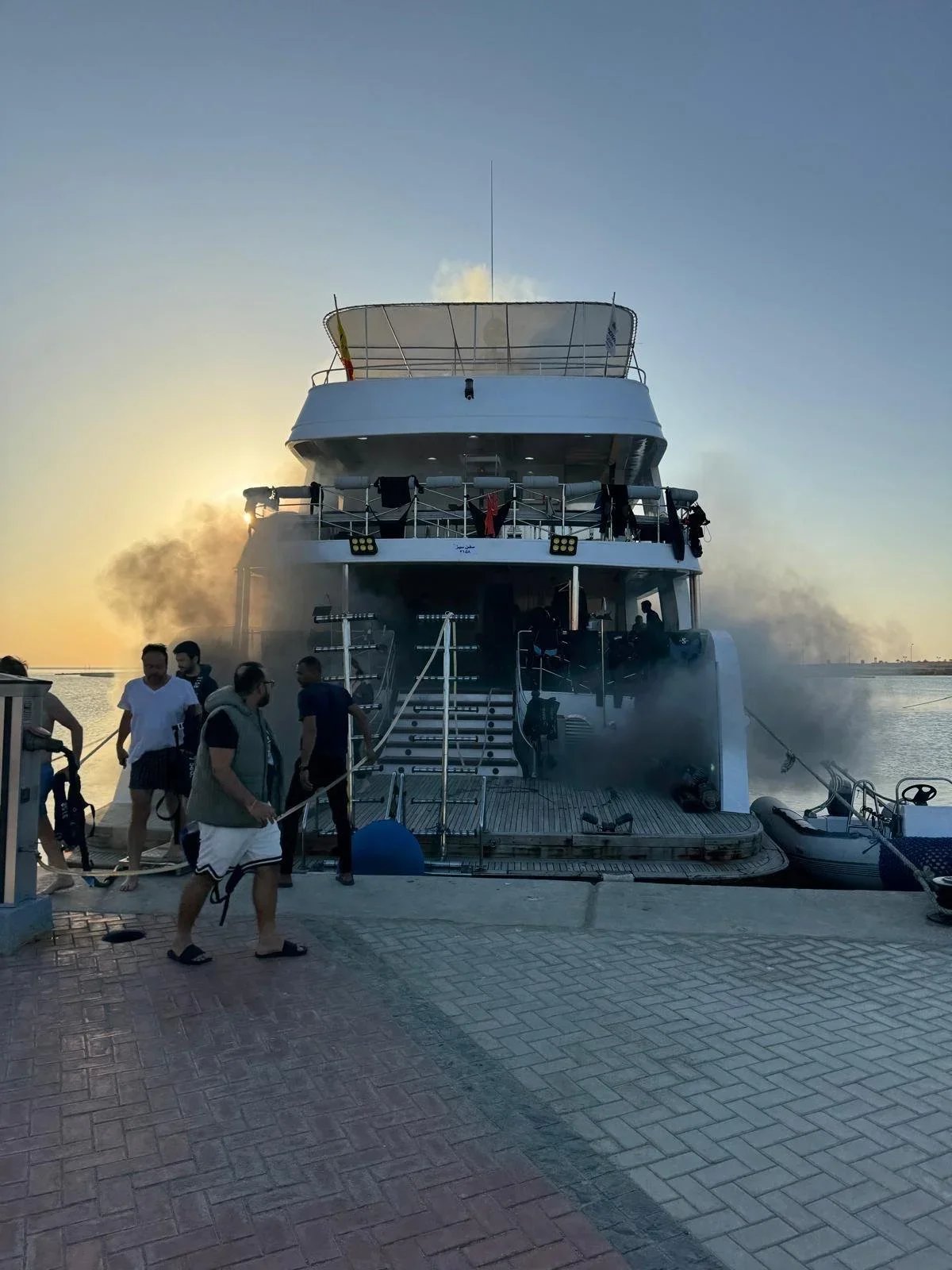
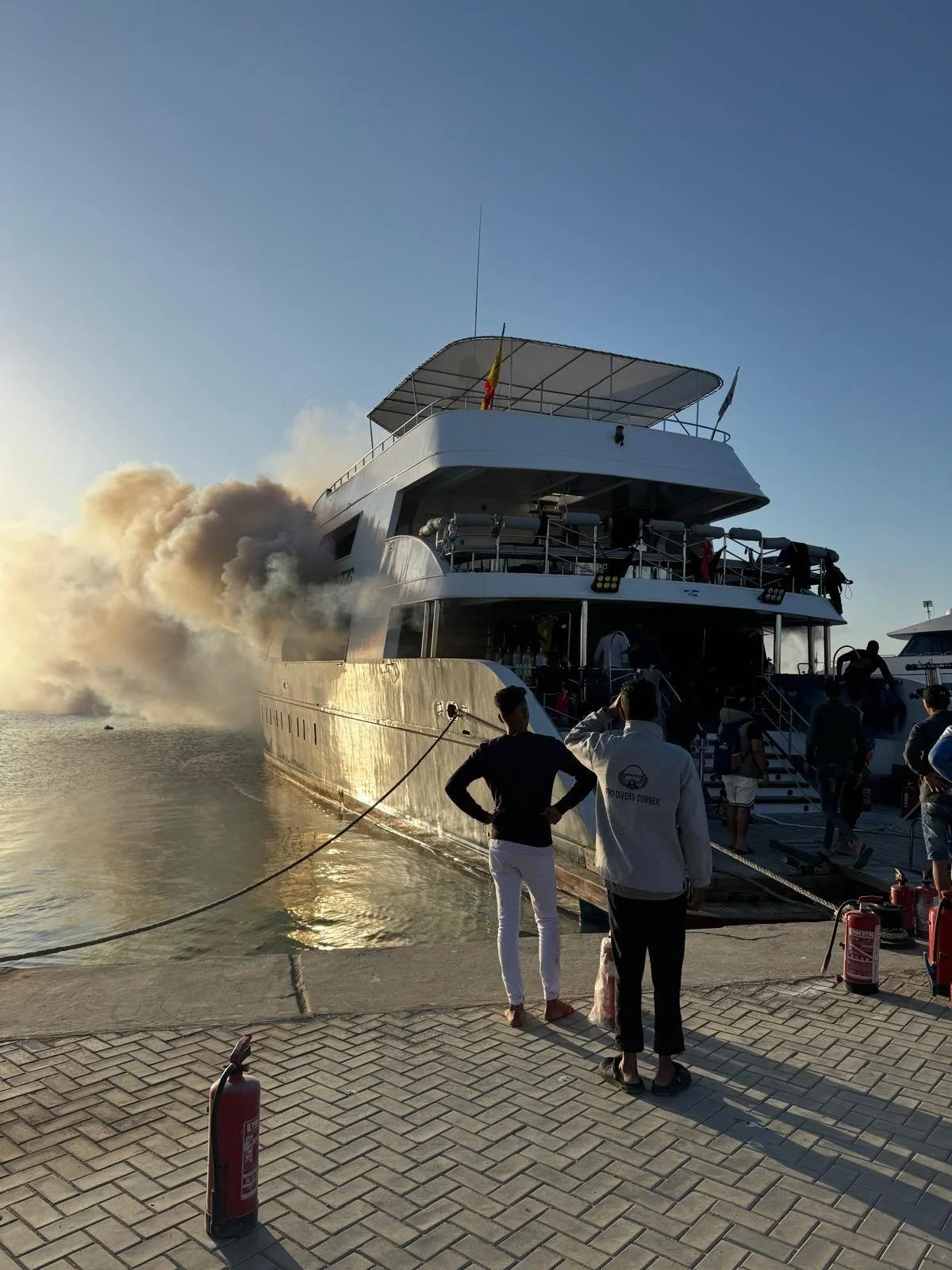
The experience makes us realize how quickly safety can and should become the most important factor in evaluating a liveaboard. What good is the best diving or snorkeling safari if people have an accident?
We have therefore drawn up a checklist of criteria to help you evaluate and select a liveaboard ship:
1. Diving Equipment & Organization
Tenders with shaded areas, cushions, dry storage, and a spare engine; equipment and camera storage compartments; cleanliness; power supply; number of tanks and high-pressure compressors, as well as a nitrox generator; rental items (masks, wetsuits, snorkels, fins, etc.)
2. Safety Standards
Life rafts and boats, life jackets, fire extinguishing systems, escape routes, drills on the use of safety equipment and evacuation
3. Comfort & Amenities
: Bed size, air conditioning, private bathroom, large common area with a bar and screens for viewing photos, videos, and movies as well as training presentations, sun deck with shade, hot tub for use after swimming in cold water, kitchen (quality, selection, service, and buffet offerings)
4. Itineraries and destination planning
A good balance of travel time to the diving or snorkeling destination and time spent on the water
5. Size & Number of Guests
Suitable for larger groups of up to 20 guests. Tender boats should be designed to accommodate approximately 6–10 people.
6. Sustainability & Environment
Compliance with guidelines for respecting the marine environment, as well as commitment to marine and environmental conservation—such as whale-watching guidelines, the use of sustainably sourced ingredients in the kitchen, plastic management (single-use vs. reusable), waste management,
Standards & Reviews
There is no international standard for the safety of diving and snorkeling boats. We need a TÜV for such liveaboard boats. A first step has been taken by Maritime Survey International (MSI), which documents and evaluates boats in terms of maintenance, safety and quality with a safety audit in order to gain the trust of divers and tour operators. A 3-star rating from MSI is considered good - and that is a seal of quality by today's standards.
If you're interested in the dream trip described here on the Sea Huter to see humpback whales, you can find the trip here:
https://www.mobywildlifetours.com/buckelwale-in-dominikanische-republik
You understand that we're not linking to the trip in Egypt!
MSI: https://marintimesurveyinternational.com/vesselsurvey
Jeff Pantukhoff: http://whaleman.org/